Forage fish are small schooling species of fish that serve as prey for larger ecologically, recreationally, culturally, and commercially important fish, marine mammals, and sea birds.
Herring, anchovies, sand lance, smelts, mackerels, and sardines are some common forage fish species.
Forage fish populations often experience dramatic fluctuations in abundance, which have wide ranging impacts throughout the ecosystem. The causes of these fluctuations aren’t always well understood, and may vary regionally and by species, but studies of sediment cores indicate that forage fish populations have experienced these fluctuations for at least hundreds and likely thousands of years.
Pacific herring
The Washington Department of Fish and Wildlife (WDFW) has been monitoring Pacific herring (Clupea pallasi) populations in Puget Sound and nearby areas of the Washington portion of the Salish Sea since 1972.
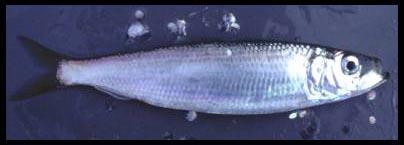
There are 21 known herring spawning areas in the Puget Sound Region, but only 2-3 groups have been identified as genetically distinct, including the Cherry Point spawning stock. Forage fish stocks do not always spawn in the same areas; they expand or shift depending on conditions.
Many Puget Sound herring stocks are doing well. 2023 was among the top five highest spawning biomass estimates since monitoring began in the 1970s.
Unfortunately, the Cherry Point (in the Strait of Georgia near Bellingham) herring stock has been in decline for decades. 2023 was the first year without spawning confirmed at Cherry Point by WDFW and partners since monitoring began in the 1970s.
In Washington waters, commercial fisheries for herring and other forage fish have been significantly reduced in recent decades, though some limited harvest continues under careful state and tribal regulations.
The Cherry Point area is closed to herring fishing. Hood Canal, the San Juan Islands, and several other areas are also closed year-round to commercial herring fishing, and most documented spawning areas are closed to commercial fishing for herring during the herring spawning season.
For details, please see our Commercial Puget Sound herring fishery page.
Recreational fisheries for forage fish are typically open year-round with hook and line and dip net gear, but the Cherry Point area is closed to herring harvest year-round. Recreational forage fish fisheries harvest limited quantities compared to overall population sizes, mostly for personal use consumption or bait.
Other forage fish species
Other forage fish species such as sand lance and northern anchovy also appear to be doing well or even expanding their population in our area.
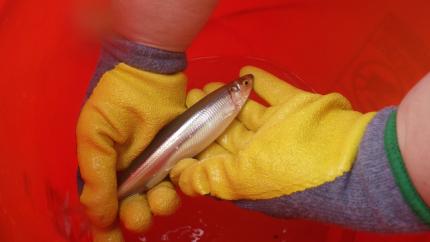
Surf smelt (Hypomesus pretiosus) and Pacific sand lance (Ammodytes hexapterus) are two forage fish species important food for marine mammals, birds, and fishes, including Pacific salmon.
WDFW protects these fish species and their spawning habitat by limiting human activities under the terms of a permit (called the Hydraulic Project Approval or HPA) on beaches where spawning has been documented. Extensive surveys have sampled many of the beaches in Puget Sound. However, despite good information on the distribution of spawning beaches our understanding of the ecology and protection needs for these species is very limited.
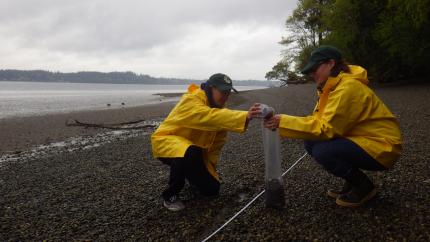
WDFW conducts research that will allow us to better ensure adequate protection of Pacific sand lance and surf smelt given current and anticipated environmental conditions, without unnecessarily constraining human activity. This research includes conducting surveys of forage fish habitat to determine where and when these fish spawn. These surveys are carried out year round on beaches throughout Washington's shoreline. These surveys consist of the documenting beach conditions and collecting a bag of about 2 liters of sediment to examine in the lab for the presence of fish eggs.
Shoreline property owners who would prefer to have their property removed from potential sampling areas for this project can notify us by filling in this opt-out form.
Publications and posters
- Effects of Sea Level Rise and Bank Protection Structures on the Spawning Habitat of Two Beach Spawning Fishes
- Anticipated Effects of Sea Level Rise in Puget Sound on Beach-spawning Fishes
- Spatiotemporal Detection of Forage Fish Eggs Derived from Long-term Spawning Surveys
- Modeling Forage Fish Spawning Habitat Suitability on Camano Island
Forage fish beach survey training and materials
Forage fish beach surveys are conducted to identify where and when surf smelt and Pacific sand lance spawn in the upper intertidal. Training to conduct beach surveys is provided by WDFW on an annual basis, or more frequently as needed. Survey training qualifies an individual as an “approved biologist” to conduct beach surveys for intertidal spawning forage fish.
Regulatory surveys related to HPA permits may only be conducted by WDFW or an approved biologist (WAC 220-110-271), and all surveys conducted by individuals not employed by WDFW require a scientific collection permit or memorandum of understanding from WDFW.
For information regarding trainings, materials, and a current list of WDFW-approved biologists, please contact Wendel Raymond, wendel.raymond@dfw.wa.gov, 360-809-8380 and Kirk Krueger, kirk.krueger@dfw.wa.gov, 360-902-2604. Additional information regarding routinely scheduled trainings can be found through the Washington Coastal Training Program.
Additionally, WDFW's Toxics Biological Observation System (TBiOS) team regularly monitors the presence of toxic contaminants in herring throughout Puget Sound to help guide efforts to protect fish and shellfish health, ensure seafood safety, and promote ecosystem recovery. Learn more about TBiOS. (PDF)
Spawning location map
The map below shows the documented spawning locations of Pacific Sand Lance, Surf Smelt, and Pacific Herring in Washington State. This map should not be considered all inclusive of spawning habitat because not all potential spawning habitat has been surveyed, and it is possible for surveys to fail to detect eggs even when eggs are present.
View Larger Map