A partial snapshot of how the Washington Department of Fish and Wildlife manages fish and shellfish in the state.
-
Marine Protected Areas
To protect and preserve a variety of marine fish, shellfish, and habitats, WDFW has established marine reserves at several sites in Puget Sound.
-
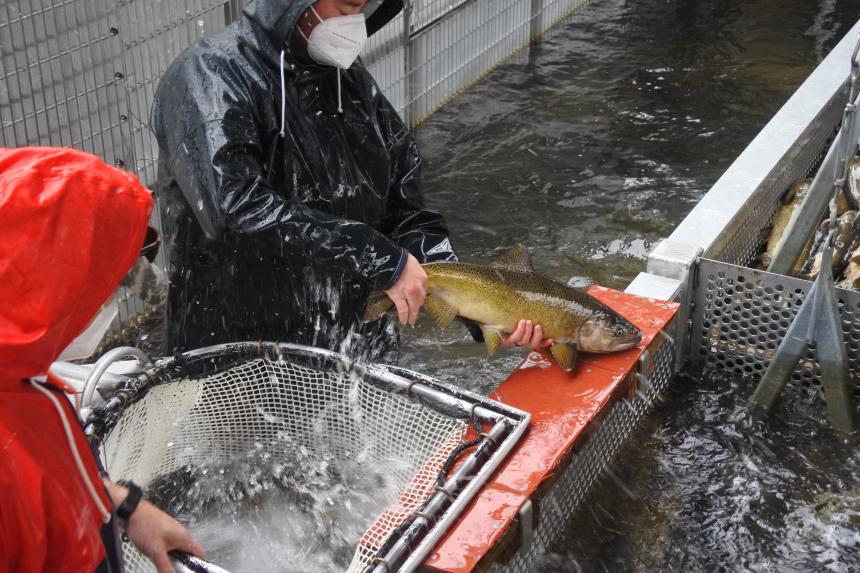
Fish hatcheries
For more than a century, WDFW hatcheries have produced fish for harvest.
-
North of Falcon
Each year state, federal and tribal fishery managers gather to plan the Northwest's recreational and commercial salmon fisheries.
-
Columbia River fisheries and management
The Columbia River is home to many fisheries across a wide swath of the state; learn more about how those fisheries are managed.
-
Puget Sound Chinook Resource Management Plan
WDFW and tribal co-managers are developing a revised version of a plan to guide the next decade of Chinook salmon fishing in the Puget Sound region.
-
Steelhead fishery management
Find out how WDFW is supporting steelhead recovery through robust steelhead management, guided by our Statewide Steelhead Management Plan.
-
Salmon Conservation and Reporting Engine (SCoRE)
Find up-to-date information and context for statewide efforts to protect and conserve salmon and steelhead.
-
SalmonScape
This mapping tool delivers the science that helps recovery planners prioritize restoration activities offering the greatest benefit to fish.
-
Forage fish ecology in Washington State
Despite good information on the distribution of spawning beaches, our understanding of the ecology and protection needs for these species is very limited.
-
Passive Integrated Transponder (PIT) tagging
PIT tags are tiny, battery-free microchips implanted in fish that let researchers automatically track individual movements and survival across Washington’s river systems.
-
Coded Wire Tag Program
Coded wire tags are used to help assess abundance and catch rates on certain populations of salmon and steelhead.
-
Warmwater fish program
This program enhances fishing opportunities for warmwater game fish in Washington while protecting native species.
-
Fish Traps and Surveys Database
The Fish Traps and Surveys database (FTS) was designed as a repository for raw, unexpanded data collected during spawning ground surveys and from adult traps. These data are used to generate estimates of escapement and other metrics of salmonid abundance.
-
Dingell-Johnson Act
Information about the Dingell-Johnson Sport Fish Restoration Act, which provides funding to state fish and wildlife agencies to support recreational fishing.
-
White sturgeon
Information about white sturgeon fisheries, quotas, and regulations.